Clean Buildings Roadmap
for Washington
Roadmap Menu
Clean Buildings for Our Future
The SCALE 2030: Clean Buildings Roadmap for Washington (the Roadmap) connects the state's ambitious climate and clean energy goals with a long-term vision and whole-system implementation approach.
The Roadmap is bold, pragmatic, and systemic. Why? Because the clean buildings transition isn’t just about changing buildings. It’s about changing the complex building sector ecosystem and the larger policy, utility, and market context influencing decision making at every level.
The Roadmap charts a path for decarbonizing buildings while positioning them as strategic assets for the grid and Washington's economic vitality. It focuses on structural changes and strategic investments the state can make in the next five years to create the regulatory and market conditions needed to deliver a clean buildings transition by 2050.
How We Get There
The Roadmap includes six levers with 16 high-impact, high-leverage actions to transform the building sector. The primary focus is state action because the scale and ambition of the transition require a level of consistency, alignment, and coordination that is beyond the capacity of most local governments in Washington.
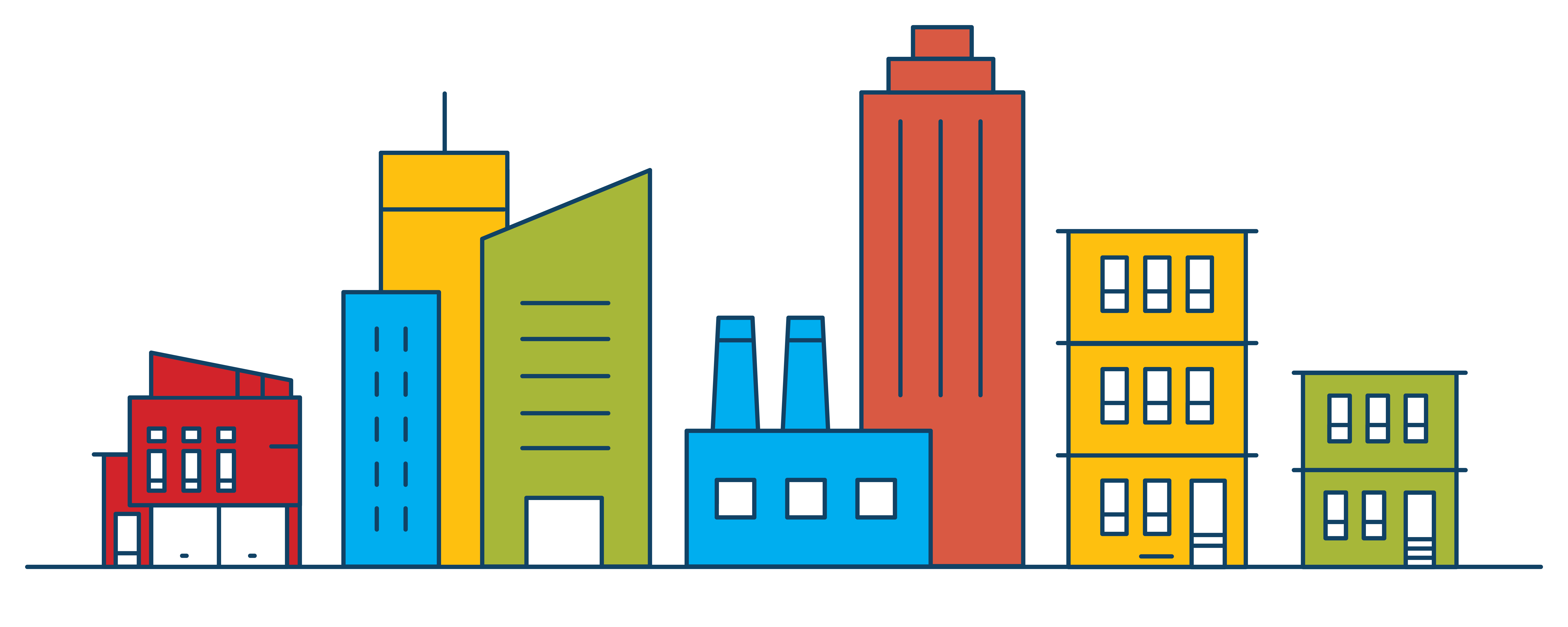
- Cover a critical gap in the current building ecosystem
- Focus on developing the institutional and market capacity necessary to scale clean buildings
- Drive change for a significant portion of the commercial and residential building stock
- Tier 1 Buildings
- Commercial Buildings > 50k sq. ft.
- Tier 2 Buildings
- Commercial Buildings > 20k sq. ft. and ≤ 50k sq. ft.
- Multifamily Buildings > 20k sq. ft.
- Proposed Tier 3
- Commercial Buildings ≤ 20k sq. ft.
- Multifamily Buildings ≤ 20k sq. ft.
- Single-family Homes ≤ 20k sq. ft.
- Commercial Buildings ≤ 20k sq. ft.
Levers and Actions
Below you can explore the six levers with their associated actions. Click on any lever or action to dive deeper.



Conclusion
The Roadmap offers concrete steps for getting Washington on course to achieve resilient, affordable, clean buildings across the state by 2050. While the Roadmap is designed for the Evergreen State, its focus on comprehensive regulatory pathways for all buildings, accelerated market transformation aligned with ambitious state energy goals, and modern utility regulation is applicable to other Northwest states and beyond.
Washington is already well-positioned to implement the Roadmap and fully scale the clean building transition by 2030. The state can build upon existing policies and the Washington 2021 State Energy Strategy’s building sector recommendations, leverage its robust community of experienced state agency leads and seasoned clean buildings advocates, and deepen collaboration with transformational organizations like NEEA and Washington Builds.
The next step for SCALE 2030 is to catalyze efforts to implement the 16 actions from the Roadmap. This includes supporting existing work and collaborating with clean building actors to advance early-stage actions such as envisioning a framework to use utility planning requirements in I-937 to advance DERs and grid utilization, standing up a Clean Buildings Market Transformation Hub, and establishing dedicated, sustainable funding sources for the clean building transition.
Advisory Group
Many thanks to the members of the Roadmap Advisory Group for lending their time and expertise to the development of the SCALE 2030: Clean Buildings Roadmap for Washington:
- Nick Cusick, Sustainable Connections
- Jonathan Heller, Ecotope
- Rachel Koller, Shift Zero
- Eli Lieberman, Washington Builds
- Sandra Mallory, Seattle Office of Sustainability and Environment
- Nick Manning, Washington Department of Commerce
- Kerry Meade, Building Potential
- David Reddy, O'Brien 360
- Nicole Sanders, King County Executive Climate Office
- Juliet Sinsterra, Spokane University District
- Caroline Traube, McKinstry